jueves, 4 de julio de 2013
Translation in an expositive text
In a expositive text, the author´s arguments are presented by means of different stylistic resources, for instance, write makes use of authorities in the field such as testimonies, quotations.

lunes, 17 de junio de 2013
ING Funtions

After a preposition
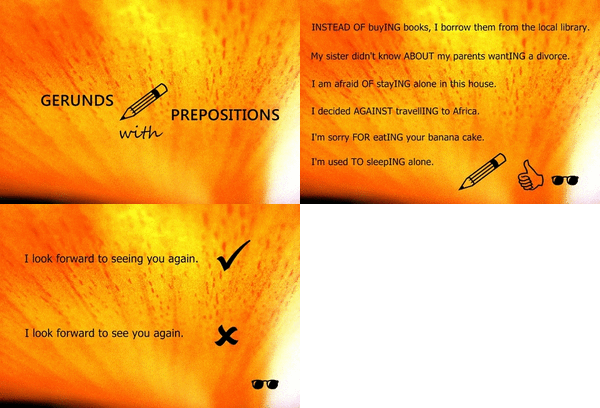
Verbs with ing is the only possible verbal form that functions as object to prepositions. When after the verb comes a preposition we must use the "-ing form". For example:
- before purshasing
- For beirng
- with becoming
She isn't very happy about leaving her child alone in the house.
There are some common grammatical errors. When we make the mistake of using a bare infinitives or to-infinitives instead of gerunds after prepositions. For example
- She isn't very happy about leave her child alone in the house.
- She isn't very happy about to leave her child alone in the house.
Source: http://suite101.com/a/how-use-gerunds-after-prepositions
Present participle

- Children shouting
- Women crying
There are two basic types can be distinguished, depending on the underlying relationship of the preceding noun modifier to the head.
1.- The premodifying noun is the underlying direct object of the verb:
House building <- The building of house <- (someone) Build houses
2.- This is less productive, category the preceding noun, has an underlying adverbial relationship of place, time, or manner) to the head noun.:
night dancing <- dancing at night <- (someone) dance at night
Source: https://sites.google.com/site/agrammaroferrors/1-1-the-noun-phrase/1-9/1-9-1
As a present participle clause
We use the -ing form after a noun and before of related noun or object. For Example:
- Women eating chocolate
- I'm in your house (noun) eating (gerund) your food (obj).
As a gerund phrase

In a gerund phrase the ing-form is a noun so they will be subjects, subject complements or objects in the sentence. It means that gerund is a verb form which functions as a noun, and it can includes other modifiers. Example:
Creating a good atmosfher is important for a class
Is a gerund phrase because the sentence begin with a gerund as a noun (creating) and then it have a verb (is).
Not Always a gerund phrase begins with -ing form. Sometimes it are after of the verb. For example:
Mr Wilson aren't prepared to authorise climbing the cliffs in the dark
Common errors with a gerund phrase:
-Gerund Phrase
Eating blackberries without washing them will make you ill.
-Other grammatical form no gerund phrase
Eating blackberries without washing them, people have a big health problems because they become ill due not washing their fruit
How to
Following instructions

Baking a cake
Cleaning a house
Doing homework
Driving a car
Continous or progressive form (in future, past o present tense)

In this case the ing form is used with verb to be and action in progress
I´m talking right now
I will be talking in two hours
I was talking yesterday
As an adjetive

That sentence uses an adjective with ing form, for describe a situation or characteristic of something
The
commonest -ing adjectives are:
amusing
|
shocking
|
surprising
|
frightening
|
interesting
|
disappointing
|
exciting
|
tiring
|
worrying
|
boring
|
terrifying
|
annoying
|
I read a
very interesting article in the newspaper today
That Dracula film was absolutely terrifying
Caracas is an exciting city
source:http://www.englishgrammarsecrets.com/ingform/menu.php
As a noun
.jpg)
When it is used
like a noun it may or may not have an article before it.
The smoking goes
against your health
Smoking goes against your health
It can also be part
of a 'noun phrase'.
Speaking to an audience is always
stressful.
Swimming after work is very relaxing.
source: http://www.englishgrammarsecrets.com/ingform/menu.php
After certains words
.jpg)
The gerund has the same form as the present participle (V-ing)
It is often used after the following verbs:
admit, avoid, consider, delay, deny, detest, dread, enjoy, envisage, fancy, feel like, finish, imagine, involve, keep, mind, miss, postpone, practise, recall, regret, resent, risk, stop, suggest
Stop smoking
Keep studying
I like eating chocolate
martes, 21 de mayo de 2013
Types of common texts
Types of common text

Today we are going to study four specific types:


Linguistics signals

Today we are going to study four specific types:
- Argumentative
- Expositive
- Comparison & contrast
- Cause & effect
ARGUMENTATIVE:
It is a text
when there is the presence of the author. In other words, when the author
conveys his ideas using the explicit or implicit arguments.
Explicit arguments:
It means to
state them clearly. Here, the writer is including himself through the first
person and certain beliefs are arguments such as: true versus false, for versus
against, these beliefs are imposed by him and will depend upon his intention. Some linguistics signals:

Linguistics signals
I think I
believe To
me My
guess
Personally In
our studies I suppose To myself
In my opinion One
considers… We agree To my view
Oneself We Us
Implicit arguments
It is a
proposition is implicit in an argument when it is part of the argument intended
by the writer either as a process of forming reasons (premises) or of drawing conclusions,
but at the same time it has not been explicitly stated by him in the text. An
evaluation of the text can be done by the author through his comments in an
omniscient way. We can use it:
Some linguistics signals:
-expresses approval or disapproval by his
choice of words
-presents
positive or negative points, effective and ineffective good reasons, or a
balance of both
-present
his argument explicitly or implicitly. Some linguistics signals:

Linguistics signals
It is impossible to… It is important… It is fundamental…
It is well know… It is rare… It
deserves special
It is simple… It
could be dangerous… It
other words…
EXPOSITIVE:
In an
expositive text, the author’s arguments are presented by means of different
stylistic resources, for instance, a writer makes use of authorities in the
field such as testimonies, quotations. To support his thesis the author could
to cite another source of information like statistics, comments, opions,
suggestion, etc. Some linguistics signals:

Linguistic signals
You can
find in this kind of texts:
Verbs
acount for change declare claim
expose accuse affirm go down
decrease estimates express report
Expression and
phrases:
Authorities think that… Researchers believe… Experts support…
Really according
to as
a matter of fact
Nearly roughly series
or sequence of events
COMPARISON & CONTRAST:
Comparison/Contrast
text shows how two or more people, places, or things are alike or different. Authors
use descriptions of the items being compared to illustrate the differences or
the similarities of the items being compared. Words that signal this type of
text structure are but, however, although, yet, similarly, on the other hand,
while, and for instance. May be used to depict the similarities and differences
in facts, events, items, or concepts. Some linguistics signals:

Linguistic signals
Different from same
as similar
As opposed to instead
of instead
of
Although however compared
with
As well as either…
or but
CAUSE & EFFECT
Cause/Effect
is used to show how the facts, events, or concepts result due to other facts,
events or concepts. Words that signal this type of text structure are because,
since, therefore, if…then, as a result of, thus, and hence. A graphic organizer
may be used to represent the relationship between the causes and effects. Some linguistics signals:
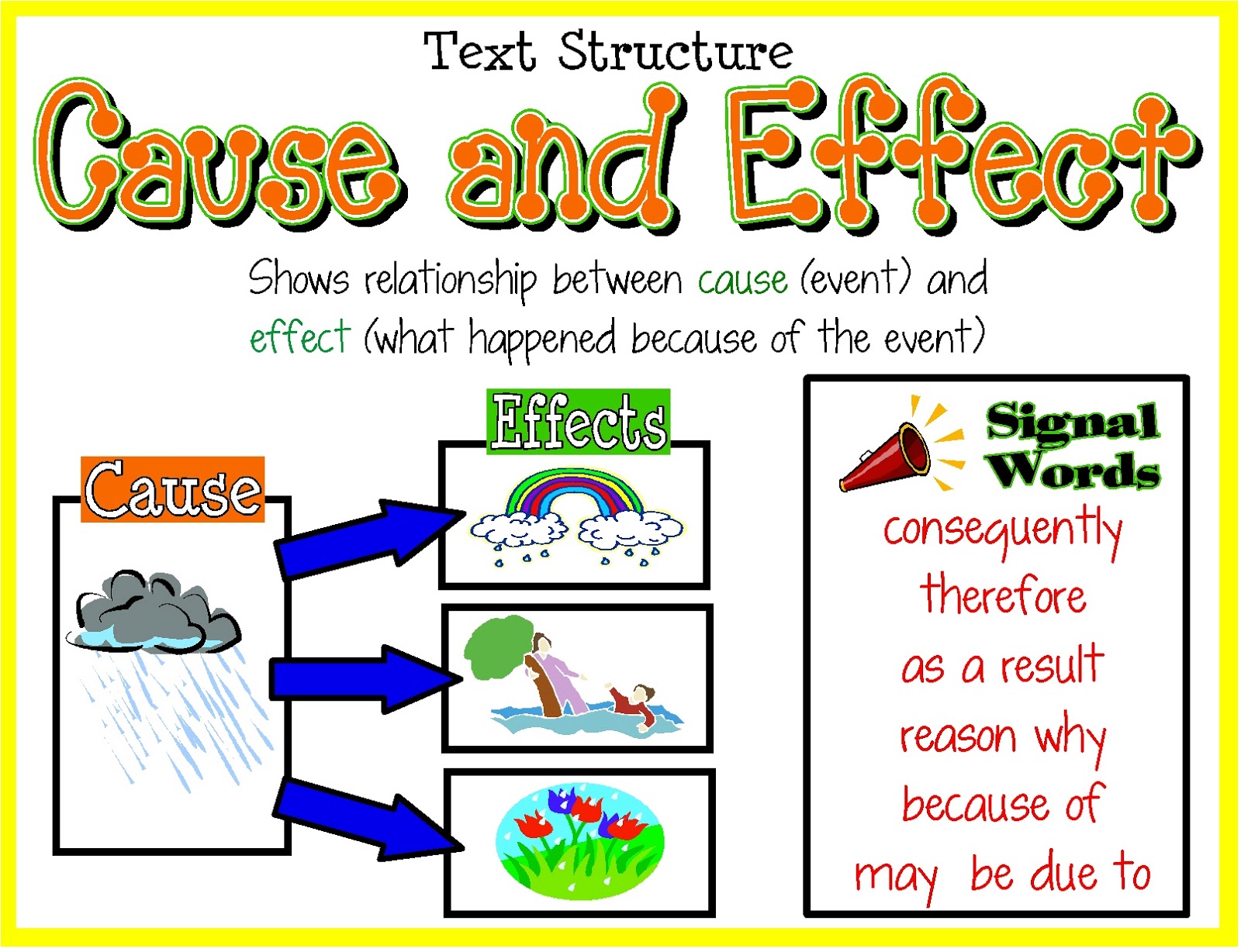
Because Yet Also
Since Consequently This led to… so
If… then Nevertheless Accordingly
Because og As
a result of In order
to
May be due to For
this reason not only but
Source: "Translation as a Tool for the Teaching of Englisg Text: A Discoruse Analysis." Delgado, Marbella. Lozada, Dalia. Santoyo, Francisco.
http://www.dayofreading.org/DOR10HO/expository%20short%20texts.pdf
Source: "Translation as a Tool for the Teaching of Englisg Text: A Discoruse Analysis." Delgado, Marbella. Lozada, Dalia. Santoyo, Francisco.
http://www.dayofreading.org/DOR10HO/expository%20short%20texts.pdf
lunes, 20 de mayo de 2013
Translation Methods
Let’s check out the methods that we use to start to translate…

TRANSLATION METHODS
1) The Semantic-Semiotic Method:
-Emphasis on interpretation of meaning
-Importace of implicitness
-Semantic component allows decoding the extralinguistic elements

Semantic - Semiotics is not just an act of reading, but an attitude of exploration of what background there any significance, its roots and the mechanisms that support it. It mean that semiotic studies the linguistic signs in the context, "the symbolic aspect of the text that results from the interaction between the knowledge of the author expressed in the text and the translator's sociocultural background to interpret it" (Delgado; Lozada; Zantoyo, 2009). Because of that the same text can have different translations.
Ex. The chief executives of the UN:
- Los jefes ejecutivos de las Naciones Unidas
- Comite ejecutivo de las Naciones Unidas
Ex. The chief executives of the UN:
- Los jefes ejecutivos de las Naciones Unidas
- Comite ejecutivo de las Naciones Unidas
2) The Communicative Method
-Emphasis on communication
-Meaning more important that form.

3) The Adaptation Method
-Emphasis on the receiver of the text.
-Choice of lenguange determined by socio-cultural shift.
-Activation of socio-cultural Backgrouned.
-Completely different form of language.

In this method the translator decides to use a different sentence or phrase to express the original meaning. Therefore the emphasis is placed on the receiver and the translator tries to adapt it according of social - cultural manners or knowledge of readers.
Ex.Proxy War
The literal translation is:
- Guerra de Poder
The adaptation is:
- Guerra por Encargo
4) The Literal Method
-Exact lexical and structural reproductione equivalence between the lenguages.
-Borrowing.
-Calque.
-Literal.

5) The Dynamic Equivalence Method
-Applicaction of the advances of discourse analysis of textual and literal criticism, of socio-semantics and semiotics.

6) TheEquivalence Method
-The meaning is given by ignoring the structure.

7) The Critical Method.
-Discovery of the author’s ideological universe.


jueves, 9 de mayo de 2013
Acronyms and Initialism
 An acronym is an abbreviation formed from the initial components in a phrase or a Word.
There is no universal agreement on the precise definition of various names for such abbreviations nor on written usage. In English and most other languages, such abbreviations historically had limited use, but they became much more common in the 20th century.
Acronyms are a type of word formation process, and they are viewed as a subtype of blending.
Acronyms were used in Rome before the Christian era. For example, the official name for the Roman Empire, and the Republic before it, was abbreviated as SPQR (Senatus Populusque Romanus). Inscriptions dating from antiquity, both on stone and on coins, use a lot of abbreviations and acronyms to save room and work. For example, Roman first names, of which there was only a small set, were almost always abbreviated. Common terms were abbreviated too, such as writing just "F" for "filius", meaning "son of", a very common part of memorial inscriptions mentioning people. Grammatical markers were abbreviated or left out entirely if they could be inferred from the rest of the text.
TYPES:
Pronounced as a word, containing only initial letters
AIDS: acquired immune deficiency síndrome
NATO: North Atlantic Treaty Organization
Scuba: self-contained underwater breathing apparatus
Laser: Light Amplification by Stimulated Emission of Radiation
Pronounced as a word, containing non-initial letters
Amphetamine: alpha-methyl-phenethylamine
Gestapo: Geheime Staatspolizei (secret state police)
Interpol: International Criminal Police Organization
Nabisco: National Biscuit Company
Pronounced as a word, containing a mixture of initial and non-initial letters
Necco: New England Confectionery Company
Radar: radio detection and ranging
Pronounced as a word or as a string of letters, depending on speaker or context
FAQ: ([fæk] or ef-a-cue) frequently asked question
IRA: When used for Individual Retirement Account, can be pronounced as letters (i-ar-a) or as a word [ˈaɪrə].
SAT(s): ([sæt] or ess-a-tee) (previously) Scholastic Achievement (or Aptitude) Test(s)(US) or Standard Assessment Test(s) (UK), now claimed not to stand for anything.
SQL: ([siːkwəl] or ess-cue-el) Structured Query Language.
Pronounced as a combination of spelling out and a word
CD-ROM: (cee-dee-[rɒm]) Compact Disc read-only memory
IUPAC: (i-u-[pæk]) International Union of Pure and Applied Chemistry
JPEG: (jay-[pɛɡ]) Joint Photographic Experts Group
SFMOMA: (ess-ef-[moʊmə]) San Francisco Museum of Modern Art Pronounced only as a string of letters
BBC: British Broadcasting Corporation
OEM: Original Equipment Manufacturer
USA: The United States of America
Pronounced as a string of letters, but with a shortcut
W3C: (W three C) World Wide Web Consortium
C4ISTAR: (C four I star) Command, Control, Communications, Computers, Intelligence, Surveillance, Target Acquisition, and Reconnaissance[14]
Multi-layered acronyms
GAIM (former name of Pidgin): GTK+ AOL Instant Messenger
GIMP: GNU Image Manipulation Program
VHDL: VHSIC hardware description language, where VHSIC stands for very-high-speed integrated circuit.
Recursive acronyms, in which the abbreviation refers to itself
GNU: GNU's not Unix!
WINE: WINE Is Not an Emulator (originally, WINdows Emulator)
PHP: PHP hypertext pre-processor (formerly personal home page)
These may go through multiple layers before the self-reference is found:
HURD: HIRD of Unix-replacing daemons, where "HIRD" stands for "HURD of interfaces representing depth"
Pseudo-acronyms, which consist of a sequence of characters that, when pronounced as intended, invoke other, longer words with less typing.
CQ: cee-cue for "seek you", a code used by radio operators
IOU: i-o-u for "I owe you" (a true acronym would be IOY)
K9: kay-nine for "canine", used to designate police units utilizing dogs
Q8: cue-eight for "Kuwait"
Acronyms whose last abbreviated word is often redundantly included anyway
ATM machine: Automated Teller Machine machine
HIV virus: Human Immunodeficiency Virus virus
PIN number: Personal Identification Number number
LCD display: Liquid Crystal Display display
TIME FOR FUN!
Do you think you don’t know acronyms? Let watch this funny video where you’ll see that use them more than you think you do.
miércoles, 1 de mayo de 2013
Function of “that”

"That" can be used in five differents forms.
(1)
As a demonstrative adjetive
Ex. That pen is mine
(2)
As a demonstrative pronoum (subject)
Ex. That is a problem
(3)
As a demonstrative pronoum (object)
Ex. You know that
(4)
As a conjunction
Ex. The Queen announced in January that she would step down
to make way for a younger generation.
(5)
As a relative clause
Ex. The Car that I sold her is good
And then we use an article of New York Times for show u how we can use "That"
 Cuba’s ability to meet every citizen’s needs has
declined.
Cuba’s ability to meet every citizen’s needs has
declined.
And then we use an article of New York Times for show u how we can use "That"
 Cuba’s ability to meet every citizen’s needs has
declined.
Cuba’s ability to meet every citizen’s needs has
declined.
But dotted among the throngs of state employees bused
in before dawn to observe International Workers’ Day, there was a novel, and
increasingly favored, breed: entrepreneurs whose private businesses the
government is counting on to absorb thousands of the state workers it considers
redundant and hopes to shed.
Their presence — albeit limited — at one of the most
important fixtures in the Castro-era calendar reflects the shifting economic
mix in a country where, for decades, private enterprise was anathema and the
state officially provided everything anyone could need, from a job to the sugar
people put in their coffee.
But the state’s ability to dothat(DPO) has declined significantly
over the years, with salaries and subsidies like food rations unable to cover
even basic needs.
“This is a way of showing solidarity with the workers
and of showing that(C)
we, too, are workers,” said Orlando Alain Rodríguez, a former sommelier at a
state-run hotel who opened a restaurant on a busy intersection in downtown
Havana nine months ago.
“I have 19 employees with me, people who otherwise
might not have jobs,” said Mr. Rodríguez, clad, along with his staff, in a
yellow T-shirt that(RC) bore the name of his restaurant, Waoo Snack Bar.
The government seemed keen to send that(DA) message,
too. Carmen Rosa López, second secretary of the Cuban Workers’ Union, expressed
hope before the march that(C) entrepreneurs would come. “For us, they are all workers who
contribute to the development of the country,” she said, according to a
state-run news agency.
That(DPS) said,
entrepreneurs were a tiny minority in the river of public servants and
employees of state-owned companies that(C) flowed, waving placards calling for
“prosperous and sustainable socialism” to the plaza, where President Raúl
Castro stood beneath a huge statue of José Martí, the revolutionary and poet.
A sea of red-clad Venezuelans and Cubans held banners
dedicated to Hugo Chavez, the Venezuelan leader and beneficent ally of Cuba who
recently died, while a truck mounted with television screens projected pictures
of the smiling former leader to the crowd.
Groups of actors and artists lent the march a carnival
atmosphere, and even at 7 a.m. instructions blaring from loudspeakers were all
but drowned out by drummers leading a crush of workers raising their hands and
swaying their hips to a conga. Students from the National Schools of Art walked
on stilts; one peeped out from a huge, papier-mâché figure of an independence
fighter. Farther back, a female sailor in a crisp white uniform jiggled from
one foot to another in a barely suppressed salsa move.
Since late 2010 when the government began issuing new
licenses for Cubans to work for themselves and employ one another, more than a
quarter of a million entrepreneurs and their employees have joined the private
sector, taking the total to about 400,000.
Economy Minister Adel Yzquierdo told the National
Assembly in December that(RC), including independent farmers who lease land from the
government, the number of nonstate workers was 1.1 million, double the figure
in 2010. Mr. Yzquierdo said the government had, over the past two years, cut
more than 350,000 people from the bloated public sector, which still employs
well over four million Cubans out of a population of about 11.2 million.
The government has also turned over about 2,000 small
state-owned businesses to their employees, according to news reports, part of a
much-anticipated but closely guarded plan to create business cooperatives.
Many Cuban entrepreneurs and economists say the growth
of the private sector has been excruciatingly slow. There is still no wholesale
market from which businesses can buy the goods they need, and the government
still limits the types of businesses open to entrepreneurs to fewer than 200, a
situation that(C) some hope will improve with the expansion of cooperatives.
HAVANA — In many ways, it was a typical May Day:
Hundreds of thousands of Cuban workers — doctors, sailors, dancers, bank clerks
— marched Wednesday toward this city’s vast Revolution Plaza, waving flags,
holding aloft banners that(C) proclaimed fidelity to socialism
and tooting plastic horns.
Demonstrative pronoum (object) (DPO)
Conjunction (C)
Relative clause (RC)
Demonstrative adjetive(DA)
Demonstrative pronoum (subject) (DPS)
Demonstrative pronoum (subject) (DPS)
Demonstrative pronoum (object) (DPO)
Relative clause (RC)
Source:
Suscribirse a:
Entradas (Atom)